Watershed restoration on local streams
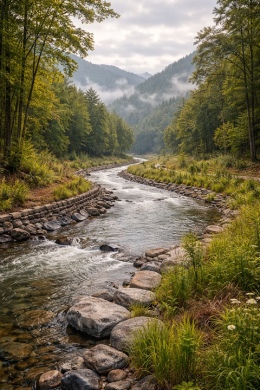
Watershed restoration has become a consistent thread running through Haywood County’s environmental planning. The Pigeon River system, along with smaller tributaries like Jonathan Creek and Richland Creek, drains much of the area. When those waterways carry too much sediment or lose their natural shape, the effects spread quickly. Fish habitat declines. Water quality drops. Flooding becomes harder to predict.
Restoration work often begins with reshaping stream channels that were straightened or armored decades ago. Instead of forcing water through rigid paths, newer projects aim to slow flow and reconnect streams to their floodplains. Rock vanes, native plantings, and gradual bank slopes help water spread out during heavy rain rather than tearing downstream.
Why small projects matter
A single stabilized bank might not look impressive on its own. Over time, though, clusters of these projects reduce sediment loads and lower flood peaks. Some of the most effective work happens on short stream segments where erosion was quietly getting worse each year.
Erosion control where land is most exposed
Erosion control remains a daily concern across much of the county. Steep slopes and shallow soils mean disturbed ground rarely stays put for long. Heavy rain can turn bare soil into moving water in minutes.
Traditional erosion controls still appear on job sites. Silt fencing and straw wattles remain common, but the approach has broadened. Early ground cover, better drainage design, and limiting soil disturbance have proven more effective than relying on barriers alone. On rural properties, landowners are sometimes surprised by how small adjustments can help. Redirecting runoff away from a driveway or reseeding a worn pasture edge can slow erosion before it starts.
Managing development impacts
Growth adds pressure. New construction introduces exposed soil, access roads, and altered drainage patterns. County requirements for erosion control plans exist for a reason, though compliance varies. Some builders adapt quickly. Others learn after repairs become unavoidable. The cost difference between prevention and cleanup rarely favors waiting.
Land stabilization on slopes and in valleys
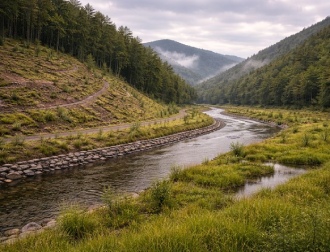
Land stabilization looks different depending on where the problem sits. On steep hillsides, the concern usually centers on slope failure. In valleys and floodplains, saturation and bank erosion take priority. Both require a mix of engineering and restraint.
In upland areas, stabilization efforts may include retaining structures, improved drainage, or reshaping slopes to reduce stress. Vegetation often carries as much weight as structural elements. Deep-rooted native species anchor soil better than shallow ornamental plantings, especially during prolonged wet periods.
Stabilizing flood-prone land
Floodplains bring a different challenge. Attempts to confine rivers tightly can raise water levels downstream and accelerate erosion elsewhere. In response, some stabilization strategies focus on giving water room to move. Setback banks, restored wetlands, and open floodplain areas help absorb peak flows. These spaces may sit quietly for years, then prove their value during a single storm.
Environmental protection beyond emergency repairs
Environmental protection in Haywood County extends past fixing damage after storms. Long-term planning shapes where development happens and where it does not. Conservation easements, stream buffers, and land-use policies all influence how vulnerable areas are treated before problems arise.
Partnerships support much of this work. County agencies coordinate with state environmental offices, soil and water conservation districts, and nonprofit groups. Funding often comes from a patchwork of grants and local allocations. The process can be slow, but layered oversight tends to improve project quality.
Tracking results over time
Monitoring has become a quiet but important part of environmental protection. Stream channels change. Vegetation fails or thrives. Drainage systems clog. Regular inspections allow adjustments that keep projects effective. Without follow-up, even well-designed mitigation efforts can unravel.
Balancing protection with everyday land use
Haywood County’s economy depends on working land. Farms, tourism, and small businesses all rely on access to stable ground and clean water. Environmental recovery efforts often support those needs rather than restrict them. Healthy streams support fishing. Stable slopes protect roads and utilities.
Disagreements still arise. Some landowners worry about limits on use. Others question long-term benefits. Experience suggests that early mitigation reduces infrastructure damage and repair costs later. Roads undermined by erosion or bridges clogged with debris quickly become expensive problems.
Where recovery efforts are headed
Environmental recovery in Haywood County continues to adjust as conditions change. Rainfall patterns appear less predictable than they once were. Population growth adds strain to sensitive areas. These factors keep watershed restoration, erosion control, land stabilization, and protection efforts firmly on the agenda.
Progress rarely arrives all at once. It shows up through steady improvements made over years. A reinforced creek bend that holds. A hillside that stays quiet after heavy rain. Taken together, these outcomes shape a more resilient landscape. For Haywood County, environmental mitigation has become part of routine land management rather than a reaction to the next disaster.
I have so much to tell, y’all. But today has been beyond emotional and I’m not sure how to put my feelings into words yet.
— Cassie Clark (@dogwoodblooms) October 19, 2024
What I will say right now is that this is Clyde, NC. Where is the media spotlight on this Haywood County community?
I cried like a baby as I rode through.… pic.twitter.com/dySI7b1OjK